Jennifer McClure`

Equipping people leaders to navigate change — and design the future — with boldness and purpose.

  • About
  • Speaking
  • Schedule
  • Blog
  • Impact Makers Podcast
  • Contact

Written by Jennifer McClure

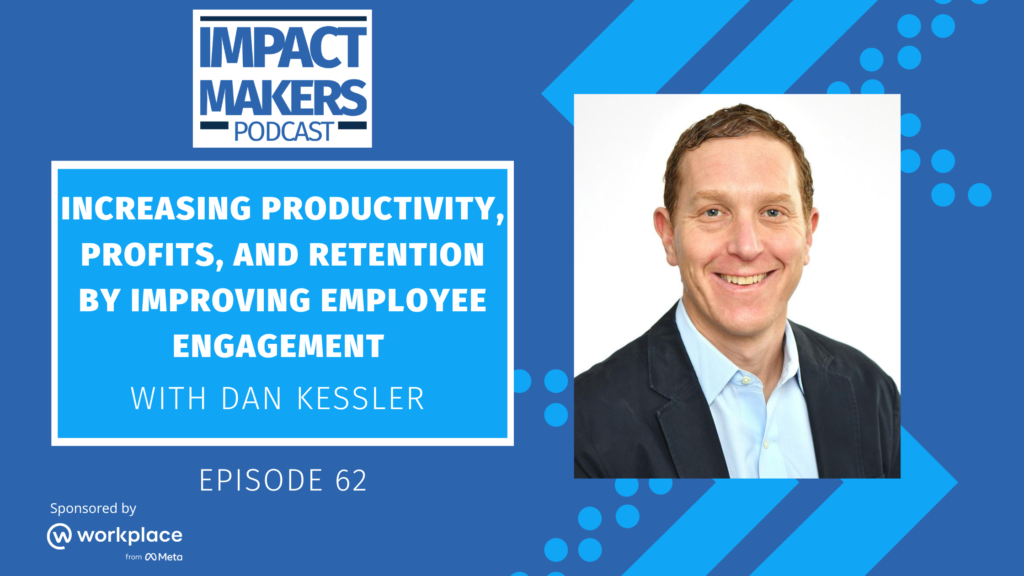
Increasing Productivity, Profits, and Retention by Improving Employee Engagement with Dan Kessler

Impact Makers Podcast Episode 062

As a leader, if there was a secret recipe that included the ingredients to increase productivity, generate higher profits, and lower employee turnover and absenteeism in your organization, you’d want that, right?

Well, what if the recipe wasn’t a secret, and the ingredients were available to you today?

I’ve got some good news for you!

The levers that drive employee engagement are available to us all. However, the results vary based upon how well we understand which levers will be the most effective in our organization, and how we create and implement action plans to take advantage of them.

In this episode of the Impact Makers Podcast, I’m chatting with Dan Kessler, President & COO of Energage – a company whose purpose is to make the world a better place to work together.

Dan and the team at Energage help organizations to measure employee engagement, understand where they are today, and guide them to simple actions that they can take to improve their culture, as well as their recruitment and retention strategies.

I think you’ll find some really great takeaways in my conversation with Dan, and be inspired to take action to increase employee engagement in your workplace.

Topics Discussed In This Episode:​​

  • What companies should be doing differently related to their recruitment strategy than they have in the past.
  • How do companies represent authentically what it’s like to work in their organization?
  • The role that pay and benefits play in driving employee engagement.
  • The biggest drivers of employee engagement.
  • How purpose and meaning impact employee engagement.
  • What Top Workplaces are doing that create double the employee engagement levels as the average US workplace.
  • Practical steps that you can take as a leader to positively impact employee engagement in your organization.

IMPACT MAKERS PODCAST – EPISODE 62

Key Quotes From This Episode:

“More engaged employees drives better business results.” ~ @Dan Kessler

“Compensation is essentially the least important factor that drives employee engagement.” ~ @Dan Kessler

“We measure employee engagement based on three things: motivation, loyalty, and employee net promoter score.” ~ @Dan Kessler

People & Resources Mentioned In This Episode:

Meta from Workplace

Dan Kessler

Energage

Top Workplaces

Top Workplaces Research Lab: Employee Well-Being and Burnout

Leaders Can Drive Employee Engagement, the Pandemic Showed Us How

Show Sponsor:

This episode of the Impact Makers Podcast is sponsored by Workplace from Meta.

Everybody’s talking about the metaverse these days, but Workplace from Meta is different – I mean, the clue’s in the name, right?

Workplace is a business communication tool that uses features like instant messaging and video calls to help people share information. Think Facebook, but for your company.

It’s part of Meta’s vision for the future of work – a future in which your job isn’t just something you do, but something you EXPERIENCE. A future in which we’ll all feel more present, connected, and productive.

Start your journey into the future of work at workplace.com/future.

Connect with Jennifer:

Send her a message [https://jennifermcclure.net/contact/]

On LinkedIn: http://www.linkedin.com/in/jennifermcclure

On Twitter: https://twitter.com/JenniferMcClure

On Instagram: https://www.instagram.com/jennifer_mcclure/

On Facebook: http://www.facebook.com/JenniferMcClureSpeaker

Categories: Employee Engagement, Leadership, Podcast
Posted on September 12, 2022

Written by Jennifer McClure

Leaders Can Drive Employee Engagement, the Pandemic Showed Us How

Group of engaged employeesI don’t know if you’re like me, but I still find it hard to believe the world changed completely for all of us just over two and half years ago.

My business as a professional speaker and trainer went from “best-year-ever!” status to a big fat zero over three weeks. But I had friends and colleagues whose businesses thrived. Some even achieved their best year ever. Those who did were successful because they pivoted quickly to meet new demands and address new customer needs.

Many business leaders I’ve spoken with have learned valuable lessons over these years. They’ve learned about resilience, their ability to do and achieve hard things, and the importance of connecting people with a shared purpose in their work, even if only to survive and to keep moving forward another day.

So, as leaders, what can we learn from the recent past to prepare us – and our teams – for the dynamic future ahead?

Reflect on what went right, what went wrong, and celebrate too

One exercise I suggest is to take the time to review what went right – and what went wrong – in terms of how your organization responded when the World Health Organization declared the global pandemic on March 11, 2020.

That was a Wednesday. Your workplace probably looked very different by Monday morning. Just four days later, you were either working from home, or masked and gloved if your workplace was deemed an essential service.

Of course, none of this process went smoothly. But whether it took a few days, weeks (or even months), your organization figured out how to navigate the “new normal.”

Since then, we’ve all been through a lot. But I hope you also take the time to celebrate what you and your teams were able to accomplish, even if it wasn’t pretty or ideal.

What surprised me most but made perfect sense

One of the things I found most interesting about the world of work during the “new normal” was the bump in employee engagement that followed the shutdown.

Organizations like Energage, the research arm behind the nation’s Top Workplaces program, reported engagement among award-winning companies (and those that aspire to be) jumped to 71 percent following several stagnant months in the low to mid-60s.

(If those engagement numbers sound high to begin with, they are. That’s because Top Workplaces typically achieve engagement levels double the national average.)

Read More: Employees Did Plenty of Soul-Searching in 2021

What caused the engagement jump amid chaos

There are many theories as to why employee engagement made a positive leap during a decidedly not positive time. Energage research revealed the primary contributor: increased frequency and quality of communication.

If you think back to those unprecedented times, I’m willing to bet this was probably true for your workplace too. Leaders were holding frequent meetings via Zoom or Teams to share what they knew to be true that day and what plans were for tomorrow.

They checked in on employees more frequently to ensure they had the resources to do their jobs – and to ask if they were okay. Leaders were also more available to answer employee questions. We found creative ways to stay connected. Employees felt appreciated. They felt valued.

Am I right?

In other words, as leaders, we were more visible and accessible during the crisis than ever before. That’s what brought people together in the workplace. More than ever before.

But then engagement slipped away … again

Unfortunately, there was little time for celebrating those record-high engagement numbers. According to Energage, employee engagement numbers dropped back to pre-pandemic levels by September 2020. And they’ve remained there ever since.

Ugh, what happened?

Many things, including the George Floyd killing in May 2020 and the resulting tensions related to racial injustice felt worldwide. Add to that increased layoffs, closed businesses, hope followed by disappointment, plus increasing fatigue from stress and change.

Employee (and leader) burnout was – and is – real. As companies struggle with how to deal with burnout, its effects are wreaking havoc as we continue through the Great Resignation and Great Reset.

All of this resulted in leaders communicating less with their employees than in the beginning months of the pandemic. Unfortunately, as employee communication reverted to pre-pandemic “normal,” so did employee engagement.

Maybe you had a similar experience. Communication increased, employees felt well-informed, people pulled in the same direction. But as new routines emerged, energy dissipated, communication waned, and check-ins became less frequent. And so did the sense of connection.

If this sounds familiar, consider the actions you can take to improve employee engagement. We did it once and we can do it again.

Why leaders should care about employee engagement in first place

Employee engagement is essential for a variety of reasons. Generally, employee engagement drives performance and retention. When employees are engaged, they want to stay with the company and give their best every day to help achieve company goals. They’re also willing to recommend and refer others to your organization. And a lack of engagement is one of the reasons why employees quit.

Read more: What Is Employee Engagement, and Why Is It Important?

As we proceed through 2022, many companies struggle to keep their best people and attract top talent. Taking steps to improve employee engagement is a worthy investment. It makes good business sense. You’ll make a positive impact on your culture as well as your company’s bottom line. Not to mention, employee engagement is one of the qualities of a great workplace. Remember when I said Top Workplaces achieve engagement levels that are double the national average?

The pandemic taught us two ways to improve employee engagement

Don’t forget: Visibility + Accessibility = Engagement

Combining research and firsthand experience we gained from the pandemic, here are two action steps you can take – starting now – to make a positive impact on employee engagement:

1. Reinvest in meaningful communication and connection

In the early days of the pandemic, many leaders were more visible and accessible to their employees than ever before, which was a factor in increased employee engagement. It’s important to think beyond weekly or monthly team meetings and to look for ways to check in on your people individually. Yes, even if you have a large team.

Look at your calendar and set aside time for formal and informal team and individual communication, even if it’s just to ask how people are doing and if they need any support or resources in their work or life.

Remote and hybrid work environments require leaders to initiate communications since there are fewer opportunities for hallway conversations, impromptu chats after meetings, or the occasional drop-ins to ask a quick question.

Read More: Remote Employee Engagement – Challenges, Activities, & Ideas

2. Make employee appreciation and recognition part of your culture

Challenge yourself to recognize and appreciate your team members more often. I know, I know. You think you’re doing a great job with that already. Most of us do. But most of us are wrong.

Consider these stats:

  • Only 67 percent believe the people who deserve recognition actually receive it. That suggests a huge gap between who we’re recognizing and what employees want to see. (Energage)
  • 29 percent say they’d willingly give up a week’s worth of pay for more recognition from their employer. (Bonusly)
  • When employee recognition isn’t prioritized, many employees (61 percent) feel underappreciated. (Energage)
  • Employees who feel appreciated are 5x more connected to their workplace culture. (Workhuman)

Early in my leadership journey, one of my team members took the time to give me some valuable feedback when turning in her resignation. She was leaving because she didn’t feel like I knew what she did in her day-to-day work.

After being initially confused by that statement – I mean, I assigned her the work, so I assumed it meant I knew what she was doing – I asked her to tell me more. It turns out that what she really meant was that she didn’t feel appreciated for the work that she was doing.

At that time, my leadership style was similar to how I liked to be managed: When we agree on what needs to be accomplished, you can leave me alone, and I’ll get it done. If I need you, I know where to find you.

Thankfully, this person took the time to teach me a valuable lesson as a leader. Not everyone wants to be managed like me. And EVERYONE wants to feel valued and appreciated.

As a result of our conversation, I set a personal goal to become more intentional about showing appreciation for my team. I asked about the projects they were working on and offered my support, even if they didn’t ask. I put time blocks on my calendar to connect informally with each team member each week for this very reason.

Setting a goal and planning to recognize and appreciate my team members ensured that it happened. As the saying goes, what gets scheduled, gets done. Don’t leave employee recognition and appreciation to chance. It can and does make a difference.

We’ve got this

A lot has happened in our lives and the workplace over the past couple of years. But if we can learn from what worked – and what didn’t – we can ensure that this difficult period in our history helped us to grow and do better as leaders for our people.

Categories: Effective Communication, Employee Engagement, Leadership
Posted on August 29, 2022

Written by Jennifer McClure

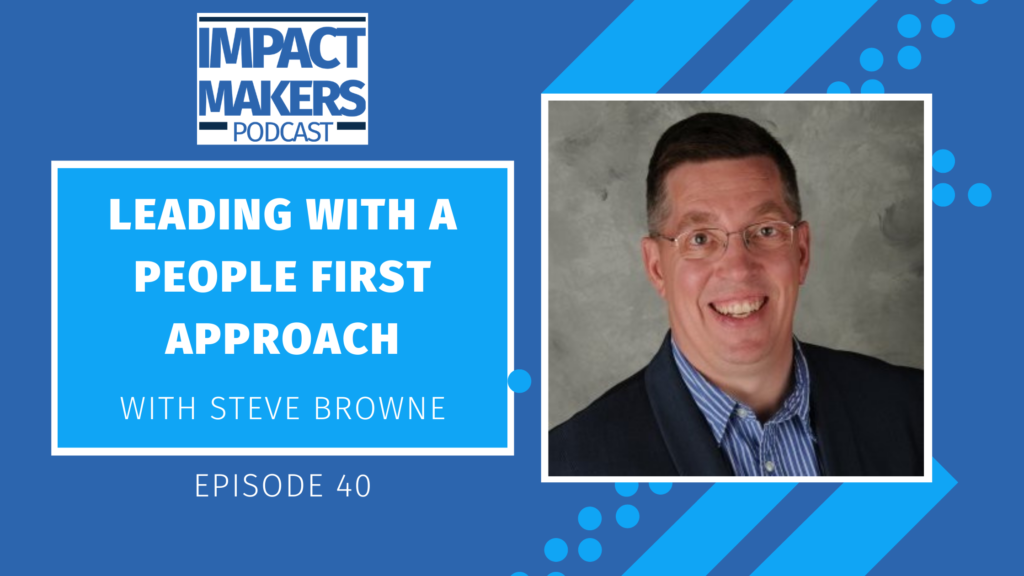
Leading With a People First Approach with Steve Browne

photo of Steve Browne

Are HR leaders the only leaders in an organization who can (or should) lead with a people first approach?

My guest in today’s episode – Steve Browne – doesn’t think so!

Steve has been my friend and mentor for over 20 years now, and he’s also a constant source of encouragement, wise counsel, connections and smiles for leaders around the world through his work as an HR executive, a board member of the largest HR association in the world, his popular blog (Everyday People), and his best-selling books (HR on Purpose !! and HR Rising !!).

Topics Discussed In This Episode:​​

Steve is well-known for his high-energy and positive approach to people leadership, and in this episode, we chat about:

  • What it’s been like to be an HR leader at an organization during a global pandemic, and the key approach all leaders must take in times of crisis.
  • The importance of building meaningful relationships to be able to lead effectively.
  • The shifts that are still to come in the workplace, and what leaders should be doing now to prepare themselves and their organizations.
  • Why Steve wrote his first best-selling book HR on Purpose !! and what compelled him to write his latest book HR Rising !!
  • How telling stories helps leaders to get their ideas and messages heard.
  • Why a people-first approach is key for all types of leaders, not just those who work in human resources.
  • And so much more!

IMPACT MAKERS PODCAST – EPISODE 40

(Email subscribers – click HERE to listen to the podcast.)

People & Resources Mentioned in this episode:

Impact Makers Episode 003 – The Heart of Human Resources with Steve Browne

Steve Browne’s blog

Steve Browne LinkedIn

Steve Browne Twitter

HR On Purpose !! Developing Deliberate People Passion by Steve Browne

HR Rising !! From Ownership to Leadership by Steve Browne

Bob Goff

Lars Schmidt

Exclamation Mark by Amy Krouse Rosenthal Tom Lichtenheld

Categories: Human Resources, Leadership, Podcast
Posted on September 23, 2020

Written by Jennifer McClure

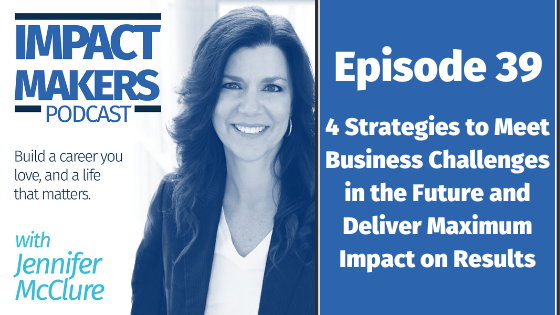
Four Strategies to Meet Business Challenges in the Future and Deliver Maximum Impact on Results

I’m very fortunate that my dream job is also my day job, and through my work as a professional speaker, I have the opportunity to speak at conferences and events around the world to leaders in a variety of organizations.

Typically, I’m speaking about topics related to making an impact through people strategies, effective leadership, and personal branding, and one of my favorite audiences to speak to includes human resources leaders.

As a former HR leader and executive, I’ll always have a special place in my heart for HR and People leaders, and I’ve got tons of stories that I can share from my own personal experiences to connect with them.

While reviewing various audio and video files from past speaking events recently as I prepare for a website update, I came across the audio from my 2016 Mega Session at the SHRM Annual Conference, which was held in Washington DC. SHRM is the largest HR association in the world, with over 350,000 members, and every year, their annual conference draws 20,000 people or more. I’ve had the pleasure of speaking at the conference every year since 2012, and leading MEGA sessions – which can sometimes include over 2,000 people.

I decided to share the full audio from my MEGA session at the conference with my podcast listeners, because even though I’m speaking to a room full of HR leaders and many of the stories are HR-related, the core message is about how to make the most impact at work, and the strategies and advice shared can be applied by any leader who wants to make a difference.

Also, this particular program is my most popular keynote speech, which I’ve been giving in some form since 2014. If you’re interested in what makes an effective keynote that’s received countless positive testimonials, has takeaways for audience members at all levels of an organization, and has earned multiple 6-figures in income for me, pay attention to the structure of this program. You’ll hear numerous stories, learn four key points, and also get some great takeaways that can be applied immediately.

Although I’ve thought about retiring this program for the last couple of years, it continues to be requested – and I love delivering it. It’s updated regularly to keep the data current, and I’ve since made the stories shared in this version sharper to meet the shorter keynote slot times that are becoming more common, but the bones are still good bones.

I hope you enjoy listening to my signature keynote – The Future of HR: 4 Strategies to Meet Business Challenges in the Future and Deliver Maximum Impact on Results!

IMPACT MAKERS PODCAST – EPISODE 39

(Email subscribers – click HERE to listen to the podcast.)

Show Highlights:

  • The top challenge global CEOs predict for their organizations in the future
  • How to make the most impact in your business, through analyzing data to make decisions
  • The difference between “being strategic” and thinking strategically
  • How to identify the most important problems that your business is facing, and take the lead in developing solutions
  • Why the ability to influence others is a super power, and is key to creating impact at work and in life

More Info and Resources:

King University
SHRM Annual Conference & Exhibition
Jennifer McClure / Keynote Speaker

—–

Thanks to King University, who’s support makes this podcast possible! King is proud to offer sixteen online degrees with accelerated programs and affordable tuition so you can start a new career faster than ever. You can choose from programs in technology, communication, and business – like an online MBA with six concentrations including human resource management. And because the program is offered fully online, you can earn your degree on your own schedule in as little as 16 months. Visit https://online.king.edu/impactmakers to learn more about the King Difference today.

Categories: Human Resources, Leadership, Podcast
Posted on February 27, 2020

Written by Jennifer McClure

Flipping The Script: Conflict Isn’t Bad, It’s Good

It’s probably safe to say that nobody likes conflict.

But, it’s also true that conflict can be helpful – maybe even necessary – if you want your ideas to become the best that they can be, and for disruption and/or innovation to occur.

Conflict Produces More And Better Ideas

In fact, studies performed in both the United States and France examined the role that conflict played in generating and producing creative ideas. The researchers assembled participants into three separate experimental conditions (minimal, brainstorming, and debate) and formed them into teams within those conditions.

Each team was tasked with generating ideas for the same challenge: how to reduce traffic congestion in the San Francisco Bay Area. Teams in the “minimal condition” were given no further instructions and told to develop as many ideas as possible. Teams in the “brainstorming condition” were given the traditional set of brainstorming rules; paramount among those rules being the notion that all judgment should be suspended and no idea criticized or debated. Teams in the final, “debate condition” were given a set of rules similar to brainstorming with one important difference: they were told to debate and criticize others’ ideas as they were generated.

When the results were calculated, the winners were clear. While teams in the “brainstorming condition” did generate more ideas than the teams given “minimal” instructions, it was the teams in the “debate condition” that outperformed the rest. Teams that debated their ideas produced an average of 25% more ideas than the other teams in the same period of time.

— Why Fighting For Our Ideas Makes Them Better

If conflict and debate can help us produce better work, and come up with more creative ideas, then why do we do we tend to avoid it like the plague?

Because we often do it wrong.

The good news is that we can fix that. The best leaders seek out conflict, and also establish ground rules and cultures where healthy conflict can occur.

Leaders Should Own Conflict

I recently watched a DisruptHR Talk given by Amanda Ono – VP People & Culture at Resolver – at the December 2017 DisruptHR Toronto event about the importance of embracing conflict in the workplace. In her Talk, Amanda makes some great points about conflict, including:

Conflict isn’t bad. It’s when it gets wrapped in ego and blame that it’s bad. Otherwise, it’s about peeling the onion to understand why incompatibility exists, and airing genuine fears and concerns.

As the Chief Excitement Officer of DisruptHR, I’ve watched hundreds of DisruptHR Talks (there are currently over 1,700 online), and this one ranks right up there as one of my favorites.

Amanda takes a traditionally held belief (conflict is bad – avoid it), and flips it (conflict is good – seek it out). She makes the case that it’s time for us to embrace conflict in the workplace, so people can create their very best work.

Teams Need Conflict

I love Amanda’s message, and encourage you to take 5 minutes to watch her Talk.

Then, go out and encourage some conflict in your workplace. 🙂

Surviving The Kool-Aid Hangover: Your Team Needs Conflict & How HR Can Make It Happen | Amanda Ono | DisruptHR Talks from DisruptHR on Vimeo.

Categories: Effective Communication, Leadership
Posted on February 21, 2018

  • « Previous Page
  • 1
  • …
  • 4
  • 5
  • 6
  • 7
  • 8
  • …
  • 10
  • Next Page »

Recent Posts

  • Why HR Should Be the Chief Disruption Officer in Every Organization
  • Mastering the Art of Virtual Networking: 5 Steps to Build Powerful Connections Online
  • Networking for Introverts: Practical Strategies for Building Meaningful Connections with Greg Roche
  • Leading with Vulnerability: The Key to Future-Ready Leadership with Jacob Morgan
  • Future Fluidity and the Evolving Role of Leadership in the Age of Disruption With Dr. Tanvi Gautam

Categories

Archives

Need A Speaker?

I've delivered keynotes and led workshops at over 350 conferences and corporate events.

If you want to check my availability for your event, or if you have questions, click below.

Start the Conversation »

Recent Blog Posts

  • Why HR Should Be the Chief Disruption Officer in Every Organization
  • Mastering the Art of Virtual Networking: 5 Steps to Build Powerful Connections Online
  • Networking for Introverts: Practical Strategies for Building Meaningful Connections with Greg Roche
  • Leading with Vulnerability: The Key to Future-Ready Leadership with Jacob Morgan
  • Future Fluidity and the Evolving Role of Leadership in the Age of Disruption With Dr. Tanvi Gautam

Connect on Social

  • Facebook
  • Instagram
  • LinkedIn
  • Twitter
  • Vimeo

Copyright © 2026 · Jennifer McClure · Privacy Policy

Copyright © 2026 · McClure Pro on Genesis Framework · WordPress · Log in